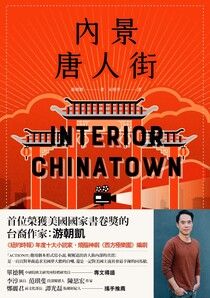
Interior Chinatown
Charles Yu
Reading Reflection
Searching for self in role-playing—reflections on identity, social expectations, and family relationships
Core Content Overview#
This reflection combines two books: Interior Chinatown and How to Live Safely in a Science Fictional Universe, both by Charles Yu.
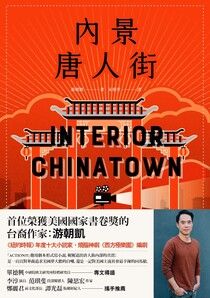

Having recently watched the Display+ series Interior Chinatown, I found the presentation style and subject matter interesting, so I came to read the original. I also chose another work by the same author, How to Live Safely in a Science Fictional Universe (which uses similar writing techniques and can be seen as a precursor to the newer work).
Story Summary#
Interior Chinatown
The story is told through scenes, acts, and characters, with the main plot focusing on life in a foreign land? I call it “foreign” because the protagonist creates a sense of not belonging. The protagonist’s parents are immigrants, but the protagonist himself is a native-born Asian American with an authentic American accent, yet always has to deliberately add an Asian accent. This portrays the exploration of identity, social positioning, and even self-recognition.
How to Live Safely in a Science Fictional Universe
Composed of several different stories, a few show hints of what would become Interior Chinatown years later. The stories are not without wild imagination, some even incomprehensible, but there are many touching moments.
Highlights#
A Passage That Moved You#
And so he became Sifu. And so she lost her husband. And so you lost your father.
It’s right around this time when “the first time” gradually becomes “the last time,” the last day of school, the last time climbing into bed to sleep with parents, the last time the family of three is like this. Life’s major events are almost all crammed into those few years, carved into memory, enough to savor for the next several decades.
This stranger is your father. Sifu is still hidden deep in his heart, sharp edges and all. There’s a dark, dim understanding in his eyes, his spirit slowly seeping into a groove in his chest. His eyes are nearly moist, the groove between father and son, they’re still aliens to each other.
“So what are you now? Are you still Kung Fu Dad?” “Not at all,” you say. “I’m Old Dad.” “Kung Fu Dad?” “Just Dad.”
We were just so angry, hoping for even one more minute together, and now we’ve unexpectedly got an hour. So much time, but nothing much to say.
Here, your kung fu is worthless. Yet you possess this world. Like a dream. Her bedroom, her bed. Her yard.
Then, one day, I woke up and Mother had become old. And I had become not so young.
Interesting or Unexpected Parts#
Since I haven’t had the experience of living abroad long-term, it’s somewhat difficult to relate to the difficulties Chinese people encounter in Western society, so my reflection will mainly focus on parts I can relate to, emphasizing thoughts about family and kinship.
In Interior Chinatown, the story uses “Kung Fu Star” as what people pursue under social stereotypes, as if you must follow society’s expected path to be considered successful (Do Chinese people seem more susceptible to social expectations?).
The role of “Sifu” (the protagonist’s father) made me feel and think about what mindset I would have if one day I too grew old, not as physically strong and spirited as in youth?
In How to Live Safely, what resonated most with me wasn’t the opening hero story, but rather the chapter “The Last Days of Me Playing Myself,” which uses the method of dialogue between an actor and himself in a play, treating family as a drama, asking how do I “play” myself well? How to act out my role with family well? How can I perform more “naturally”? Very interesting.
Key Insights or Values#
Since I was young, my father mostly worked away from home, so our time together was limited, and I don’t know him well. Therefore, my father and I aren’t actually close. I often use “mutual respect like guests” to describe my relationship with him. Later, through university, military service, and entering society, until past 30 and approaching middle age, I suddenly became aware and turned around to find him with a full head of white hair.
Even though I now live not far from my old home (Taiwan is only so big anyway), I rarely go home, rarely even call. When I go home during Chinese New Year, it always feels like a social obligation? (Do Chinese people always want to show their best side in front of parents, rarely sharing their troubles? Or is it just me?) Perhaps sometimes forgetting those “professional actor” techniques and learning to interact more naturally.
Personal Reflection & Practice#
Impact on Me#
We are all playing different roles—playing parents and children in the family, trying to play reliable colleagues, bosses, or subordinates in the workplace. These roles aren’t simply a single performance but a linear series of scenes interwoven with life. Getting too deep into character, sometimes entering a role for too long makes it difficult to switch, becoming the boss at home or a babysitter at work. Playing these roles for too long, we even forget what we were originally like.
You (or father) may have once played a hero, your own hero or someone else’s hero, with a few heroic moments of your own. Life is spent pursuing such moments, but one day you may start to feel inadequate. How will I cope then? (What is father’s mindset now?)
Others are also playing their roles toward you, some performing well, others not so satisfactory, or perhaps just not to your satisfaction. This reminds me of a scene near the end of the American TV series Young Sheldon, describing his father, roughly meaning: He might not be an all-powerful/perfect father, he’s just an ordinary person doing his best, doing what he believes is the best he can do.
Practical Application#
Perhaps occasionally make more phone calls? Next time I go home, try chatting with father about personal matters, sharing some worries?
Extended Thinking#
Thought-Provoking Questions#
Is your relationship with family close? When was the last time you called home?
Recommendations & Summary#
Suitable Readers:
I originally expected a semi-comedy work like the American series, but found the original novel’s style quite different, without comedy elements. Suitable for readers who enjoy exploring metaphors and deeper meanings.
Summary:
Interior Chinatown is actually quite chaotic to read (maybe I lack comprehension?). The jumping scenes and plot are a bit dizzying, but within the chaotic plot (scenes), it provokes worthy contemplation. How to Live Safely is a collection of short stories, reading without much pressure.
Recently wanted to read something light but kept reading deep stuff (sweat).